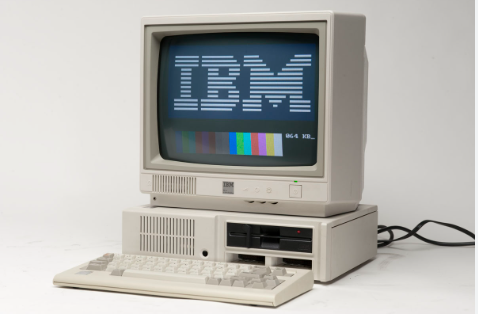
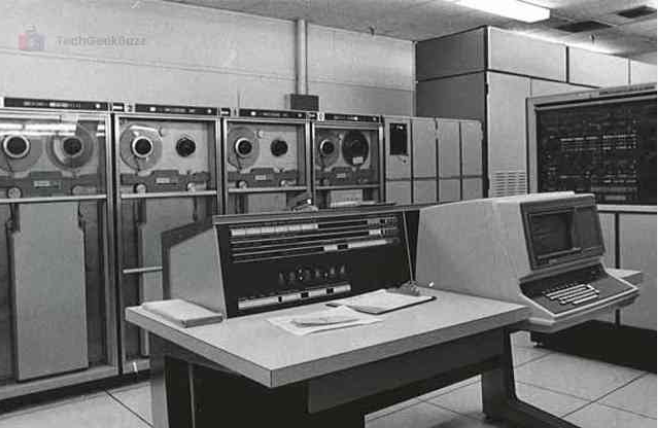

As the vacuum tube era drew to a close, a revolutionary shift occurred in the computing world: the invention of the transistor. This tiny component, smaller and far more efficient than vacuum tubes, marked the beginning of the Second Generation of Computers (1956–1963). With transistors at the core, computers became faster, more reliable, and accessible to a wider range of industries.
From Vacuum Tubes to Transistors
The first-generation computers were monumental but bulky, prone to overheating, and limited in power. The invention of the transistor in 1947 at Bell Labs by John Bardeen, Walter Brattain, and William Shockley offered a powerful alternative.
By 1956, transistors replaced vacuum tubes in computers. These smaller electronic switches were not only more energy-efficient but also faster and more durable, paving the way for the second generation of computers.
Key Characteristics of Second Generation Computers
- Transistors instead of vacuum tubes: leading to reduced size and heat generation.
- Magnetic core memory: improved storage capabilities.
- Batch processing and multiprogramming.
- Punched cards and magnetic tape: for input/output and data storage.
- Introduction of high-level programming languages like COBOL and FORTRAN.
- Faster computation: million instructions per second (MIPS).
Notable Second-Generation Computers
IBM 1401
- Widely used in businesses.
- Affordable and efficient for tasks like accounting and inventory.
IBM 7090
- A powerful mainframe computer used for scientific research and government projects, including space exploration.
UNIVAC II
- An improved version of the first-generation UNIVAC.
- Faster with magnetic core memory.
These computers were a major upgrade in terms of both processing power and application. They became essential tools in government agencies, universities, and large businesses.
Software and Programming Advancements
One of the biggest leaps in this generation was the introduction of high-level programming languages. First-generation computers could only understand machine language, but now programmers could use:
- FORTRAN (Formula Translation): Ideal for scientific and mathematical applications.
- COBOL (Common Business Oriented Language): Widely adopted for business data processing.
This allowed computers to be programmed more efficiently and with less complexity.
Limitations of Second-Generation Computers
Despite their significant improvements, these machines still had drawbacks:
- Required cooling systems, though less intense than vacuum tubes.
- Still quite large, typically filling rooms.
- Maintenance required trained specialists.
- Limited graphical capabilities (no GUI).
Advantages Over First Generation
| Feature | First Gen (Vacuum Tubes) | Second Gen (Transistors) |
| Size | Very large | Smaller |
| Power Consumption | High | Lower |
| Speed | Slower | Faster |
| Reliability | Low (frequent failures) | High |
| Programming | Machine language only | High-level languages |
Impact on the World
The rise of second-generation computers helped shape modern computing in several ways:
- Enabled automation in industries.
- Used in government data processing, weather forecasting, and early space missions.
- Laid the groundwork for the third generation — introducing integrated circuits.
Related: First Generation Computers (1940–1956)
Conclusion
The second generation of computers transformed how we interacted with machines. By replacing vacuum tubes with transistors, computers became faster, cheaper, smaller, and more accessible. They empowered industries, scientists, and governments to solve complex problems and process vast amounts of data.
Without this critical leap, the digital age would never have accelerated at the pace we know today.